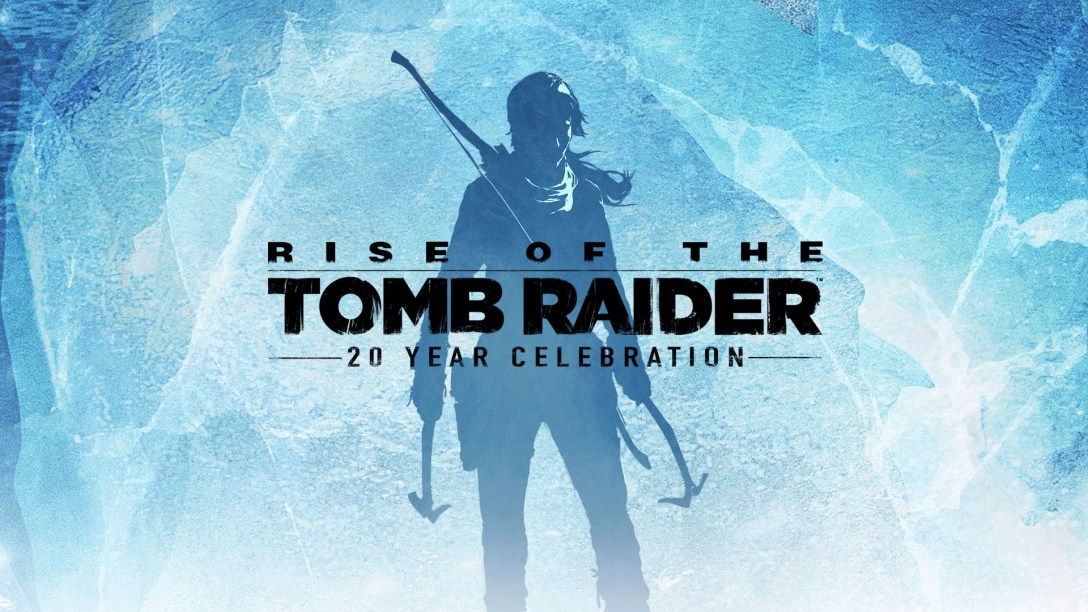
I’ve just watched the credits roll on Rise of the Tomb Raider, and in the quiet aftermath, I’ve realized this middle chapter of the Survivor trilogy is a fascinating paradox. It’s an adventure that constantly makes you feel invincible, yet intrusively holds your hand; it’s visually majestic, yet stumbles over its own technical foundations; it tells a compelling story of trauma and growth, yet entirely loses its way within its own mythology.
Here is a deep dive into my trek through the Siberian wilderness—from battling hardware bottlenecks to analyzing the psychological evolution of a gaming icon still searching for her true identity.
1. The Optimization War: From Visual Poverty to Brute Force
Let’s address the elephant in the room: PC performance. My journey began on a modest rig, only to undergo a massive generational leap right in the middle of the campaign.
| Hardware Setup | GPU & RAM | The In-Game Reality |
| The Baseline | GTX 1650 Ti (8GB RAM) | A punishing, flat experience. Forced to play on medium-low settings to maintain playable framerates. |
| The Upgrade | RTX 5060 (16GB RAM) | Visually spectacular, allowing for high/max settings, halved load times, and high-res textures. |
Upgrading to the RTX 5060 finally allowed the game to flex its graphical muscles. Aesthetically speaking, Rise remains an absolute showstopper. Yet, despite the sheer brute force of a modern 50-series card, the underlying cracks in the engine still showed.
In expansive hubs like the infamous Geothermal Valley, the game suffers from micro-stuttering and visual hiccups that betray a fundamentally flawed PC port. It’s an aggressively VRAM-hungry title that struggles with asset streaming. The harsh lesson? Next-gen hardware can mask poor optimization, but it cannot magically rewrite legacy code.
Thankfully, the often-criticized NVIDIA App acted as my safety net. Its modern auto-tuning algorithms managed to find the delicate sweet spot between framerate stability and visual fidelity, saving me from the agonizing trial-and-error of tweaking .ini files.
2. The Plastic “Prophet” and the Death of the Wikipedia Effect
This brings us to what I consider the game’s most unforgivable narrative misstep. When you boot up a Tomb Raider game, you expect to step into the boots of an archaeologist unearthing ancient secrets hidden within the folds of real, recorded history.
The Wikipedia Effect: That undeniable spark you feel when watching an Indiana Jones film or playing Civilization. It’s the irresistible urge to pause your game, open a browser tab, and discover how much truth lies behind the legend you’ve just encountered.
In the 2013 reboot, the myth of the shaman queen Himiko and the island of Yamatai worked brilliantly because it was anchored in genuine Japanese folklore. In Rise, that historical magic shatters entirely.
The writers took a fascinating, real-world concept (the invisible Russian city of Kitezh) and hollowed out its cultural significance. In its place, they injected a generic “Prophet” and a “Divine Source” that resembles a sci-fi alien reactor far more than a religious artifact.
- By fabricating the myth from scratch, the joy of historical discovery is killed.
- The conflict with Trinity devolves into a bland, paramilitary skirmish completely disconnected from real-world archaeology.
Without historical roots, Lara ceases to be an archaeologist and becomes the generic action hero of a muddled fantasy flick.
3. The Illusion of Mastery: A Perfect Blockbuster
While the lore might stumble, the gameplay pacing never skips a beat. One of the absolute triumphs of this trilogy is its mastery of action flow. Rise is desperately eager to make you feel like a badass, and it succeeds flawlessly.
The scripted sequences are pure, choreographed adrenaline: sprinting across crumbling ice, leaping over bottomless chasms, and grabbing a ledge a millimeter away from certain death. In reality, the actual difficulty is remarkably low. The game guides you with a paternalistic touch, correcting mid-air trajectories and highlighting the correct path with painfully obvious white paint.
Yet, the illusion works. It is pure, unadulterated entertainment. We don’t play Tomb Raider to endure the punishing, methodical frustration of a Soulslike; we play to feel like the invincible protagonist of a summer blockbuster. In that specific regard, Crystal Dynamics has engineered the perfect rollercoaster.
4. Lara Croft: Between Obsession and True Maturity
Psychologically, the Lara of Rise is a character in violent transition. She is no longer the terrified survivor of Yamatai; she is proactive, lethal, and dangerously obsessed.
The engine driving her is a consuming, toxic guilt regarding her late father. Lara is willing to do whatever it takes to clear Lord Croft’s name, and this blind fury makes her ignore glaring red flags (such as Trinity’s obvious infiltration into her personal life). Her true character arc resolves only in the finale. By destroying the Divine Source, Lara accepts a bitter truth: her father was right, but the world isn’t ready to handle that kind of power. She stops fighting a posthumous PR battle for her family name, and finally steps up to protect history itself.
5. The Netflix Comparison: When Melodrama Drowns the Action
While exploring the Siberian tundra, I decided to check out the animated series Tomb Raider: The Legend of Lara Croft on Netflix. The comparison between the two mediums is jarring and gave me a newfound appreciation for the video game.
If the frantic gameplay balances Lara’s dark introspection on PC, the animated series allows her to be completely crushed by perpetual angst. She comes across as an excessively “emo” version of the iconic tomb raider, trapped in endless therapy sessions and dialogue heavy with regret.
Because the show takes place after the third game, it handed me some frustrating spoilers regarding Trinity’s ultimate fate. However, it left me with one absolute certainty: I vastly prefer the interactive Lara. Even when she suffers, the playable Lara takes action. The Netflix iteration often feels like she is merely enduring the weight of the universe.
Conclusion: Toward the Shadow of the Jungle
Rise of the Tomb Raider is a journey of extreme contrasts. It is gorgeous to look at and thrilling to play, yet weighed down by imperfect optimization and a lazy approach to mythology. However, the post-credit scene springs the perfect trap: the cold-blooded sniper execution of Ana, followed by Lara and Jonah’s departure for South America, immediately made me want to pack my digital bags.
Now, the mud, the jungle, and the Mayan ruins await me in Shadow of the Tomb Raider. I am genuinely hoping to rediscover the Wikipedia Effect that went missing in the snow. With my RTX 5060 primed to make the Ray Traced shadows shine, I’m ready to see how the genesis of the Tomb Raider finally comes to a close.
What do you think?
Do you prefer adventure games that explore real historical myths, or are you fine with purely fictional lore? And how much are you willing to forgive a poorly optimized PC port if the graphics leave you speechless? Let me know in the comments below!
Discover more from Zera's Castle
Subscribe to get the latest posts sent to your email.
 Zera's Castle