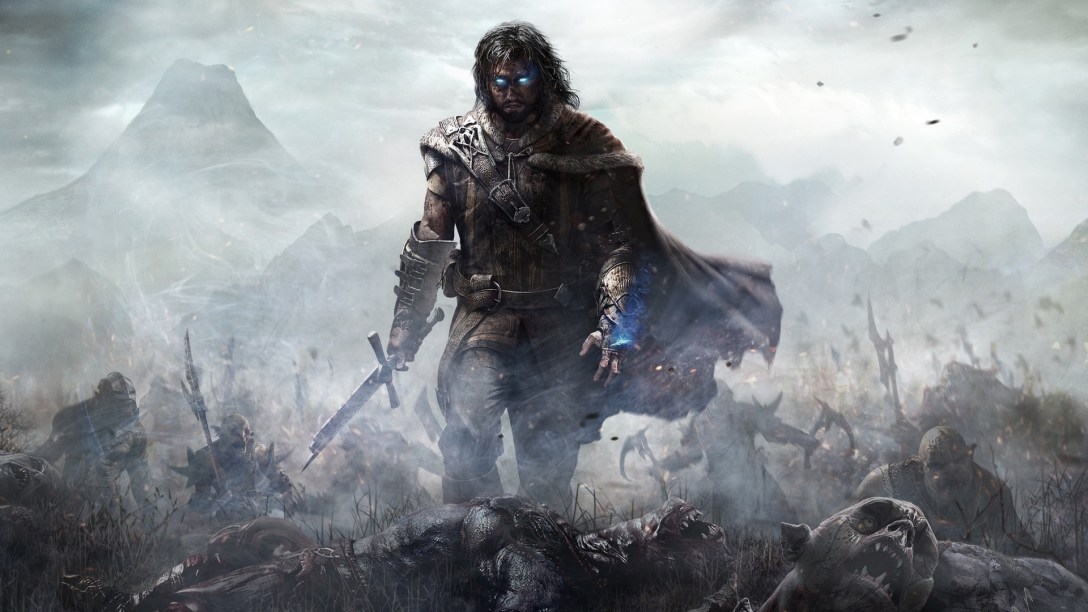
I’ve just driven the final sword into the black heart of Middle-earth: Shadow of Mordor (DLCs included). As the credits rolled, my mind wasn’t lingering on the revenge plot or the fidelity to Tolkien’s legendarium. Instead, I found myself reflecting on how a title from 2014 still manages to school modern open-world games in the art of systems design.
It is a chimera of a game. A hybrid beast stitching together the parkour fluidity of Assassin’s Creed and the rhythmic counters of Batman: Arkham. Yet, it rises above its inspirations thanks to one procedural engineering marvel: the Nemesis System. But there is a catch. Replaying it today, with years of veteran experience under my belt, I realized Shadow of Mordor suffers from a fascinating, almost tragic flaw: if you play too perfectly, you break the experience.
This isn’t just a review; it is the war diary of a Ranger who tried to be a “smart predator,” only to realize he was sabotaging his own story.
The “Dirty” Freeflow and the Symphony of Bone
Let’s address the steel in the room. If Batman: Arkham was a mathematical dance, Shadow of Mordor is a bar fight in the mud. The combat trades surgical precision for raw, ugly ferocity. When Talion decapitates an Uruk, you don’t just see it; you hear the wet tear of flesh and feel the heavy thud of the impact. It’s visceral.
I built my Talion around the sword, upgrading it until it became less a weapon and more a force of nature. By the endgame, with reduced execution counters and double special moves, I wasn’t fighting; I was blending. Walking into a stronghold surrounded by forty screaming Uruks wasn’t a trap for me—it was a buffet.
However, my true love was “aggressive stealth.” Not the passive, wait-in-a-bush stealth, but preparatory dominance. Clearing rooftops, sniping cage locks to release Caragors, and watching the panic unfold before descending like a wraith. This is where the game peaks: it sells you the fantasy of being the apex predator.
The Design Crutch: Wraith Vision
There is, however, a glaring visual scar I deliberately ignored: Wraith Vision. The game begs you to use it, turning the lush, gritty world into a flat nightmare of blue neon and red skeletons. I refused. Using it strips away depth perception and immersion. Playing “by eye”—reading the terrain, spotting shadows, listening for footsteps—made me infinitely more lethal. It turns out, turning off the superpowers makes you a better superhero.
The Nemesis System: When Competence is a Curse
The Nemesis System is the game’s beating heart. It relies on a cycle of failure: enemies remember you. Kill them, they rot. Die to them, they get promoted. Burn them and fail to finish the job? They return, scarred and wrapped in bandages, nursing a grudge. Or so I’ve been told.
My problem? I was suffering from a terminal case of competence. As a genre veteran, I slaughtered Captains on our first meeting. No deaths meant no promotions. No survivors meant no recurring villains. I unintentionally “broke” the emergent narrative simply by playing well. The penalty for success was a revolving door of generic, forgettable victims.
However, this efficiency triggered a form of Darwinian natural selection. By culling the weak (those vulnerable to stealth or arrows), I left alive only the freaks of nature—the ones generated with perfect immunities.
And that is how I met The Singer.
The Ballad of the Singer (Or: Schrödinger’s Orc)
The Singer was a unique Warchief. He didn’t just growl; he spoke in rhymes (charming at first, maddening by the tenth hour). More importantly, he was a tactical dead end. Immune to Stealth. Immune to Executions. Immune to Ranged. Blocker of frontal attacks.
He was the antithesis of my build. My overpowered sword was useless against him. But here lies the accidental genius of Shadow of Mordor: I don’t actually know if I killed him.
In the final massive siege, my Talion was a whirlwind of Area-of-Effect explosions and storm-speed slashes. The screen was a cacophony of fire, particle effects, and black blood. The Singer might have died to a stray barrel explosion, or he might have retreated while I was butchering his bodyguards. And honestly? That ambiguity is perfection. In the fog of war, you don’t always get a dramatic slow-motion finale. He is my Schrödinger’s Orc: both dead and alive, forever rhyming in the back of my mind.
The Grinding Halt and the “Bright” Lord
If the gameplay is King, the world structure is a lazy Jester. The second map, Nurn, offers a visual palette cleanser (green grass!), but structurally, it’s a copy-paste job. Once you unlock the ability to Brand Orcs, the game shifts from action to management. And let’s be real: there is something disturbingly dark about brainwashing an entire race to serve you, turning them into mindless sleeper agents. It’s fun, but repetitive.
The DLC Verdict
- Lord of the Hunt: Forgettable padding.
- The Bright Lord: Now this is interesting. Playing as Celebrimbor in the past strips away your resilience. You are a glass cannon. The final boss fight against Sauron was a masterclass in frustration until I realized the narrative clue: you can’t kill Sauron. You have to dominate him. The game forces you to use the Brand mechanic on the Dark Lord himself. It’s a brilliant ludonarrative moment that explains Celebrimbor’s arrogance better than any cutscene.
The Celebrimbor Heresy: A Tolkien Purist’s Nightmare
We cannot close this file without addressing the Elf in the room. If you are a fan of The Silmarillion or Unfinished Tales, playing this game feels like experiencing a high-budget fever dream. Monolith Productions didn’t just bend the lore; they snapped it over their knee.
To understand why, you have to know who Celebrimbor really was.
1. The Weight of Blood In the books, Celebrimbor isn’t just a random smith. He is the grandson of Fëanor, the creator of the Silmarils—the most brilliant and problematic Elf in history. Celebrimbor inherited his grandfather’s genius but sought to distance himself from his family’s dark reputation. He didn’t want power; he wanted to create beauty that would last forever.
2. The Seduction of Annatar In the game, Celebrimbor and Sauron seem like rivals/partners. The reality is far more subtle and tragic. Sauron came to him in disguise as Annatar (“Lord of Gifts”), a being of light and wisdom. He seduced Celebrimbor not with promises of domination, but with the knowledge to preserve Middle-earth and make it as fair as the Undying Lands. Celebrimbor was deceived, not complicit.
3. The Three Rings Here is the crucial difference: Celebrimbor forged the Three Elven Rings (Vilya, Narya, and Nenya) alone, in secret. Sauron never touched them. That is why they do not corrupt the wearer, though they remain bound to the fate of the One Ring. He made them to heal and protect, not to wage war or control minds.
4. The Brutal End The game gives him a wraith-like vengeance. The book gives him only silence and pain. When Sauron forged the One Ring, Celebrimbor heard the spell and realized he had been betrayed. Sauron attacked Eregion, captured the smith, and tortured him for the location of the Three Rings. Celebrimbor, showing immense strength, refused to speak. He wasn’t ritually sacrificed to become a ghost; he was executed. Sauron used his body, shot through with Orc-arrows, as a macabre war banner to lead his armies.
The Verdict: The game turns a noble, tragic victim into a ruthless, power-hungry wraith who essentially wants to become Sauron. Is it heresy? Absolutely. Tolkien is likely spinning in his grave. But from a gameplay perspective? It was necessary. A noble ghost wouldn’t justify the brutal mechanics of beheading and branding Orcs. To give us the “Bright Lord,” the developers had to sacrifice the true Lord of Eregion.
Conclusion: The Legend You Write Yourself
Shadow of Mordor is a paradoxical gem. It rewards creativity but punishes perfection. The story written by the scriptwriters is bland, but the stories you carve with your sword—the rivalries, the escapes, the accidental explosions—are legendary.
It is also a tragedy of intellectual property: the Nemesis System is now patented by Warner Bros., locked away in a legal vault until 2035, preventing other developers from iterating on this genius mechanic.
I leave Mordor with the memory of a combat system as smooth as oil, and the haunting rhymes of a Singer who may, or may not, still be out there.
My advice? If you play it, don’t be afraid to fail. Let an Orc kill you. Let him get promoted. The scars make the story better.
And you? Did you have a Nemesis who forced you to retreat? Or were you a surgeon of death who never saw a recurring villain? Let me know in the comments below!
Discover more from Zera's Castle
Subscribe to get the latest posts sent to your email.
 Zera's Castle