Introduction: The Relief of Quitting
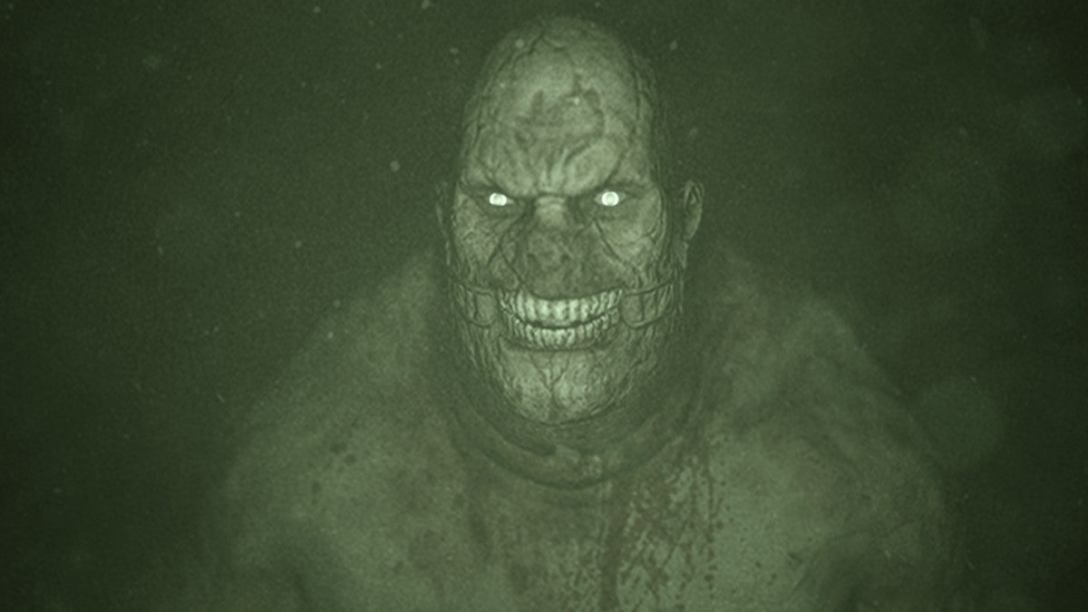
I’ve just watched the credits roll on Outlast. My heart rate is slowly returning to a standard resting rhythm, and my palms have finally stopped sweating against the controller. I made it. I survived the corridors of Mount Massive Asylum, I dodged lunatics wielding cleavers, and I spent an embarrassing amount of time hiding under putrid beds and inside metal lockers that smelled of rust and despair.
It’s over. And to be honest, the first thought that crossed my mind wasn’t “What a masterpiece.” It was: “Thank God I never have to do that again.”
Don’t get me wrong: Outlast is a landmark title. It defined an era and wrote the rulebook for first-person horror for a decade. But now that I’m on the other side, I can admit the truth: I am done with “hide and seek.”
In this post, I want to explore why the helpless-horror genre has lost its edge for me, the sci-fi twist that caught me off guard, and how my obsession with being a “modern completionist” is leading me toward a new nightmare: the Resident Evil saga.
The Problem with Being Helpless
Let’s be clear: the atmosphere of Outlast is textbook perfection. Red Barrels created a hell on earth that feels alive, sick, and breathing. The sound design alone is enough to induce a panic attack.
However, halfway through the game, the immersion cracked. The anxiety didn’t just fade; it curdled into frustration.
The problem lies in the core loop. It never evolves. You enter a room, find a key, trigger a scripted chase, hide in a locker, wait for the AI to leave, and repeat.
Crucially, horror is fragile. It relies on the unknown. In Outlast, if you get caught and die, you have to replay the section. Suddenly, the terrifying monster isn’t a monster anymore; it’s just a set of code with a predictable patrol path. The fear vanishes, replaced by the tedious task of waiting for an NPC to move so you can sprint to the next door.
It is a disempowerment fantasy. While effective for short bursts, over 10 hours it becomes a chore. I realized I didn’t want to be a victim anymore. I wanted to be a survivor.
The Twist: Science Disguised as Hell
I have to give credit where it’s due: the ending completely threw me off.
For the entire game, I was convinced I was dealing with the supernatural. Between the ghostly apparition of the Walrider and Father Martin’s religious rambling, I expected the finale to reveal a portal to another dimension or a gate to Hell.
But then came the reveal: it’s not mysticism. It’s hard science.
The “Walrider” isn’t a ghost; it’s a swarm of military-grade nanites controlled by a lucid dreamer. The “possession” isn’t demonic; it’s biological.
I realized that everything I had seen—the cult, the gospel, the rituals—was just madness trying to rationalize high-tech weaponry. Father Martin didn’t understand the science, so he called it God. It was a perfect execution of Arthur C. Clarke’s law: “Any sufficiently advanced technology is indistinguishable from magic.”
Even though this narrative twist was brilliant—turning a ghost story into a sci-fi tragedy—it wasn’t enough to make me want to play the DLC.
The fans told me: “You have to play ‘Whistleblower’. It’s the true ending.”
I hesitated. I wanted to see how the nanotech plot resolved, but the prospect of another 4 hours of locker-hiding felt like torture. So, I watched the ending on YouTube. I saw the “true ending” where the corporation is exposed and burned to the ground. It was a fantastic narrative payoff, but I’m glad I didn’t suffer through the gameplay to see it.
Finding the Sweet Spot: Active Fear vs. Passive Fear
This experience forced me to rethink my taste in horror. I love dark atmospheres. I love tension. But I crave agency.
I thought about Alien: Isolation. On paper, it’s my dream game. But in practice, it’s Outlast on steroids—a 20-hour game of hiding from an invincible AI. I realized that installing it would be an act of self-sabotage.
Then I thought about Bioshock. Rapture is just as terrifying as the Asylum, but in Bioshock, you have a wrench. You have plasmids. You have a shotgun.
The fear doesn’t vanish because you are armed; it transforms. It shifts from “I hope he doesn’t see me” to “Do I have enough ammo to survive this?”
That is Active Fear. It forces you to make decisions, manage resources, and aim straight. It’s stressful, but it’s engaging. Outlast is just Passive Fear: you have no decisions to make, only hiding spots to pick.
The “Modern Completionist” Solution
So, having archived Outlast, I asked myself: “What now?”
The answer was obviously Resident Evil. It’s the king of survival horror. But I have a specific neurosis: I am a completionist. I can’t just jump into Resident Evil 4 because it’s the most fun. I need to see the plot evolve, I need to know who Leon and Claire are from the start.
But I also have standards. I have no intention of wrestling with games from 1996 featuring tank controls and static camera angles. I want to play in 2025, with modern fluidity.
It felt like a deadlock. Either play old, clunky games for the story, or play new games and be confused by the plot.
And then, I realized that Capcom had pulled a rabbit out of the hat.
The Roadmap: Rebuilding History
Capcom didn’t just remaster their old games; they rebuilt them from the ground up. The Remakes are narratively faithful but mechanically modern. They allow me to satisfy my need for order without sacrificing gameplay quality.
Here is my battle plan:
1. The Entry Point: Resident Evil 2 Remake (2019)
I’m skipping the first chapter (the mansion). I’m starting in Raccoon City with Leon S. Kennedy. This game seems to have everything I missed in Outlast: a claustrophobic setting (the Police Station), high anxiety, inventory management, and, most importantly, firearms. It’s the perfect balance of “scary” and “playable.”
2. The Bridge: Resident Evil 3 Remake (2020)
Chronologically, it overlaps with RE2. It’s shorter and more action-packed. It will serve as the perfect palate cleanser—an adrenaline-fueled escape movie between two massive games.
3. The Payoff: Resident Evil 4 Remake (2023)
This is the end goal. Seeing Leon evolve from the scared rookie of RE2 into the hardened agent of RE4. This is the character arc I’m here for.
Conclusion
Uninstalling Outlast felt liberating. It was like ending a toxic relationship: we had some unforgettable moments, but ultimately, we just weren’t compatible anymore.
I realized that gaming should be a pleasure, not a penance. And my pleasure, I’ve discovered, lies in the weight of a virtual handgun when something jumps out of the dark.
So, goodbye Mount Massive Asylum. Goodbye Walrider. Goodbye to the metal lockers where I wasted hours of my life.
I just downloaded Resident Evil 2 Remake.
I’m standing in the main hall of the Raccoon City Police Station. It’s dark, it’s quiet, and I can hear a guttural groan coming from the east hallway.
I checked my inventory: I have a Matilda loaded with 12 rounds.
Finally, I can shoot back.
Discover more from Zera's Castle
Subscribe to get the latest posts sent to your email.
 Zera's Castle