The trap is set.
Three guards converge on a strategically dropped bottle of sake. Above them, a shinobi balances silently on a tiled roof; in the bushes below, a samurai readies his dual katanas. I hold my breath, press Execute, and watch the digital clockwork snap into deadly, synchronized motion. Three bodies fall. No alarms sound. I exhale, hit F5 to Quick Save, and smile.
This is the intoxicating, flawless loop of Aiko’s Choice, the standalone expansion to the tactical masterpiece Shadow Tactics: Blades of the Shogun. On paper, it is a masterclass in how to craft a “more of the same” expansion. It doesn’t reinvent the wheel; it takes a near-perfect mechanical formula and polishes it until it cuts like glass.
Yet, when the screen finally faded to black and the credits began to roll, the usual triumph of conquering a difficult game never arrived. Instead, I was left with a lingering, hollow ache.
The sadness wasn’t just the emotional weight of saying goodbye to a brilliantly written cast of characters. It was a realization that pierced straight through the screen: Mimimi Games, the studio that poured its soul into this clockwork masterpiece, no longer exists.
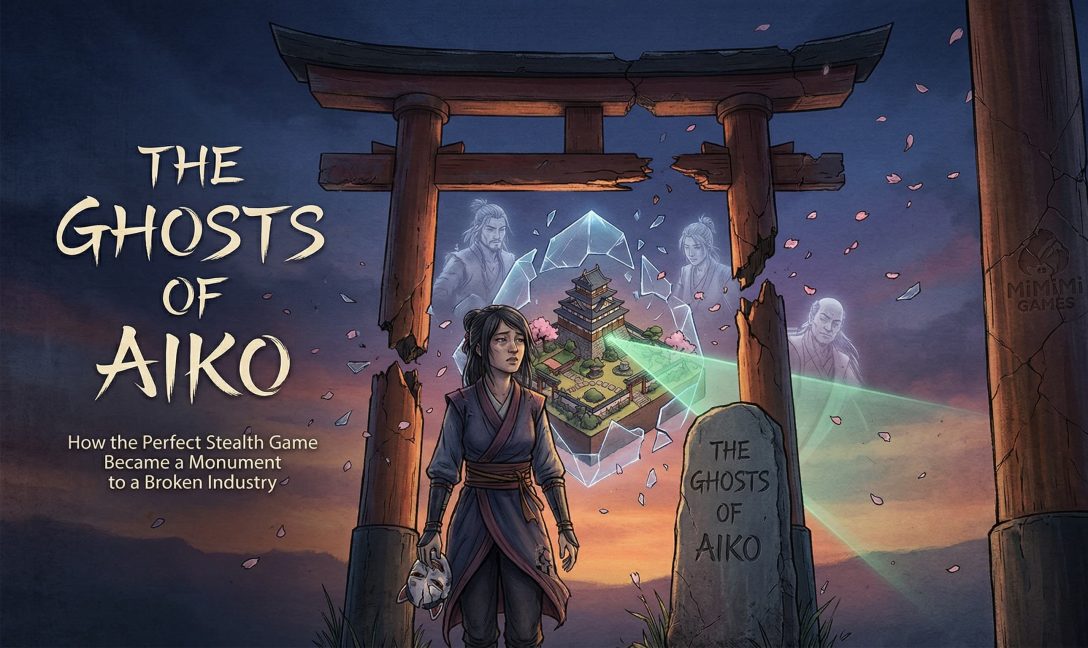
This isn’t just a review of a stealth game. It is an autopsy of a genre that was presumed dead, miraculously resurrected, and now finds itself orphaned once again. Above all, it is a hard look at the modern gaming industry—a relentless machine that systematically grinds its brightest talents into dust.
The Phantom of Aiko: Playing a Tragedy in Reverse
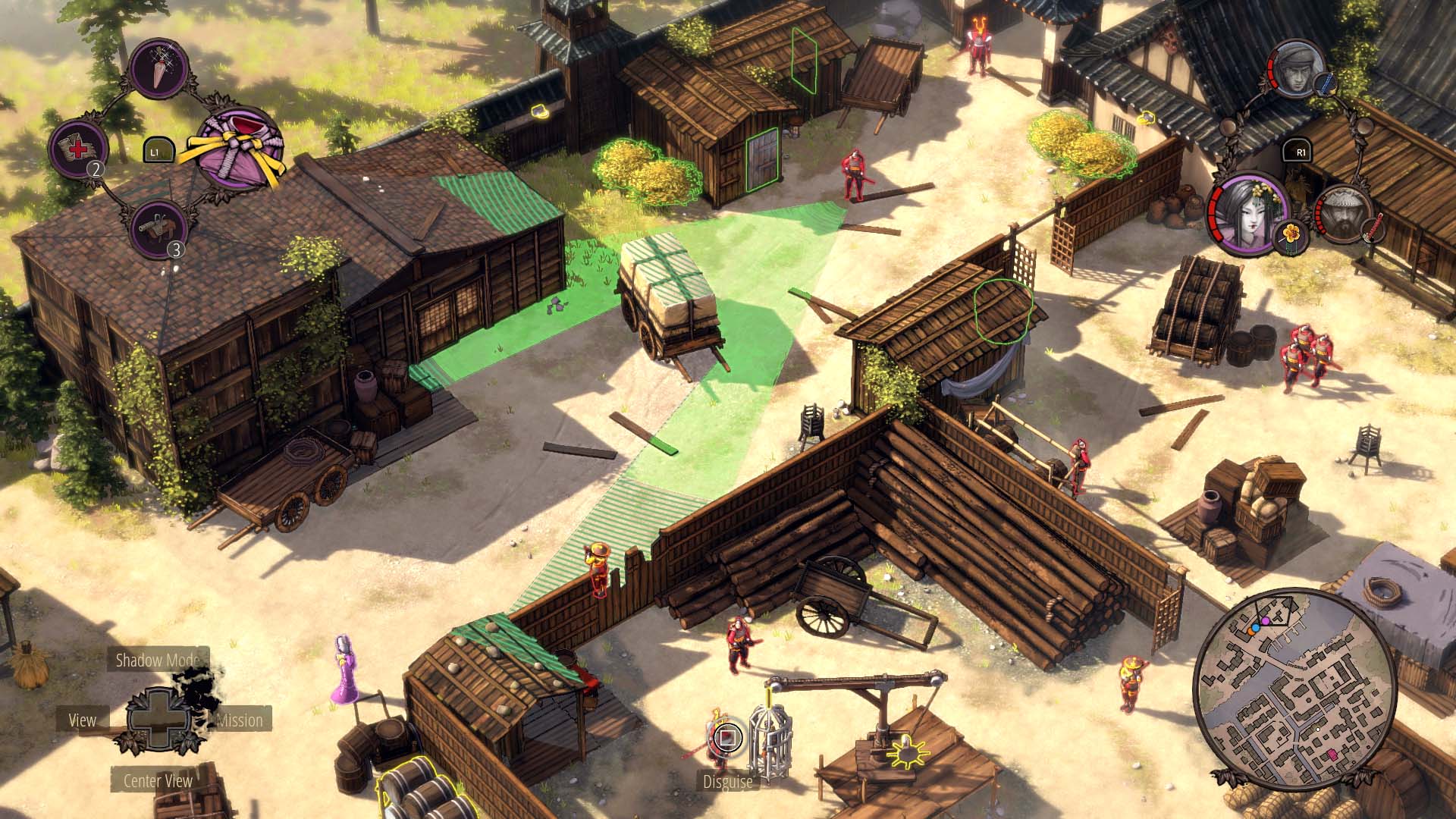
In a gaming landscape obsessed with sprawling, empty open worlds and the instant dopamine hits of relentless action, Real-Time Tactics (RTT) games demand something rare from the modern player: patience. You don’t run in guns blazing. You wait in the shadows. You study vision cones. You calculate patrol routes down to the millisecond.
Aiko’s Choice proves you don’t need a bloated AAA budget or a barrage of gimmicky mechanics when your level design is handled by absolute geniuses. The economy of space here is stripped to its bare essentials, creating environmental puzzles that feel like lethal mathematical equations.
But the true triumph of this expansion is narrative, fueled by a devastating dramatic irony.
Set chronologically before the final, tragic mission of the base game, Aiko’s Choice forces us to experience the protagonist’s ultimate moral crossroads. Aiko must renounce her past as a ruthless spy and sever ties with her former master to embrace her new “family”—and specifically, her love for the samurai, Mugen.
Playing this adventure while already knowing Mugen’s ultimate fate in the original game transforms a tactical puzzle into a Greek tragedy. Every shared glance, every line of banter between the two, carries a crushing, unspoken weight. It is a miracle of writing: a video game where we view our heroes from high above, small as ants, manages to strike with the visceral force of prestige cinema.
You spend hours fighting to secure their future, fully aware that their future is already gone.
Escaping the “90s Bully”
Many players of my generation (the “over-30” crowd) struggle to understand how the RTT genre became this refined. Our memories are often tied to gaming trauma. Mention Commandos: Beyond the Call of Duty (the infamous 1999 expansion) to a veteran player, and watch them physically flinch.
A few years ago, I booted up that exact title. I couldn’t get past the first level without triggering an alarm. I genuinely asked myself: “Has modern gaming made me soft?”
The answer is no. Modern games aren’t inherently “easier”; they are just intelligently designed.
Games like the early Commandos relied on “hostile difficulty.” They threw you into microscopic maps, hid vital information, and punished a half-second delay with an instant Game Over. It was a rubber wall, erected purely to artificially inflate playtime. You weren’t fighting the enemies; you were fighting the game itself.
Mimimi, conversely, patented the concept of transparent difficulty. In Shadow Tactics, the system feeds you every single piece of data you need. Click a guard, see his line of sight. Drop a marker, see exactly who is watching that specific pixel of dirt. If you fail, it’s not because the game cheated you; it’s because your plan was flawed.
By introducing the Showdown Mode (the tactical pause), they eradicated the frustration of frantic clicking. We moved from wrestling with archaic interfaces to conducting a flawless symphony of simultaneous takedowns. It became a game of intellect, not reflexes.
The Digital Diorama: Why Isometry Matters
This mechanical miracle would not be possible without a courageous aesthetic choice: the isometric perspective.
For a decade, the gaming industry suffered from a dictatorship of the camera. The prevailing dogma dictated that the only way to sell a blockbuster was through photorealistic 3D, tightly over the protagonist’s shoulder. This obsessive pursuit nearly killed strategic complexity in favor of superficial, cinematic immersion.
Titles like Shadow Tactics subverted the rules, proving that isometry is not an archaic technical limitation, but the visual language of the architect.
When the camera rises to a bird’s-eye view over the cherry blossoms in Aiko’s Choice, you are no longer confined within an avatar’s body. You become a director. The game ceases to be an obstacle course and becomes a living, breathing diorama.
This brings two massive advantages to the medium:
- The Democracy of Tactics: In a market saturated with adrenaline, the isometric view slows down time. It strips away visual noise. It becomes an intellectual haven where victory belongs to the brightest idea, not the fastest trigger finger.
- The Budget of Ideas over Pixels: Freed from the staggering financial burden of motion-capturing every pore on an actor’s face, studios can pour their resources into systemic complexity. They can afford to experiment. Isometry is the safe zone where gameplay remains King, insulated from the bloated costs of AAA production.
Surviving the Meat Grinder of Success
Yet, sometimes, ingenuity and critical acclaim are simply not enough.
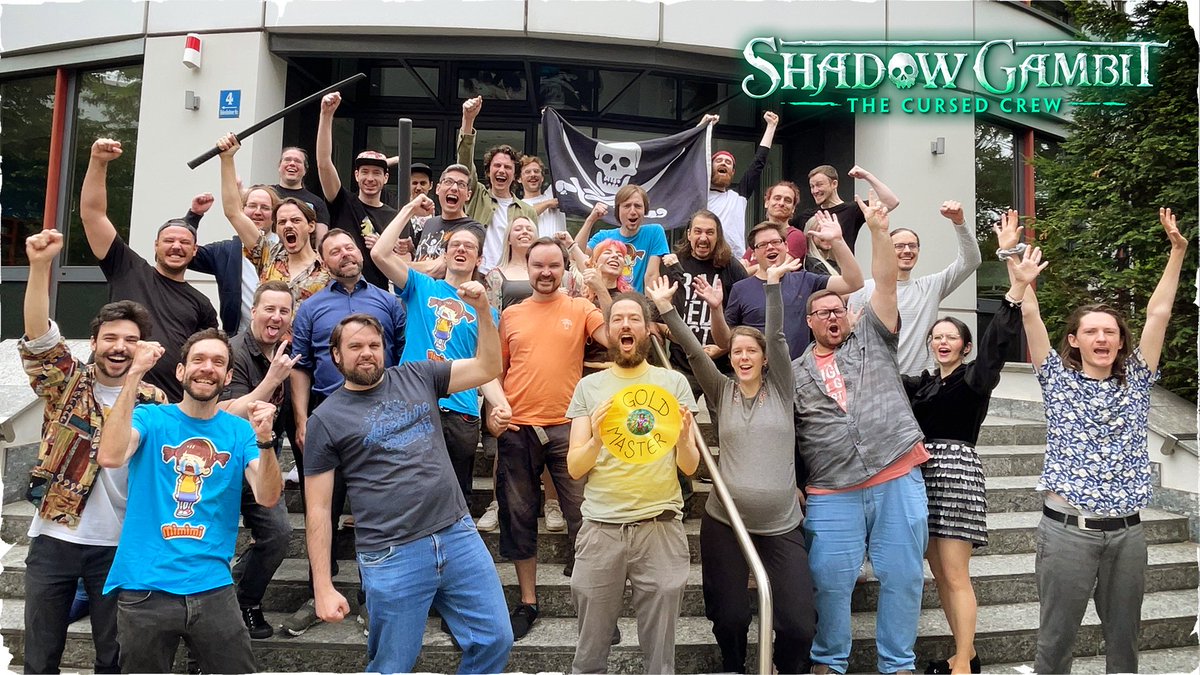
Last year, Mimimi Games closed its doors for good. Let that sink in. They did not close due to bankruptcy, a lack of ideas, or disastrous reviews. Their swan song, Shadow Gambit: The Cursed Crew, is universally hailed as a masterpiece.
They closed out of sheer, inexorable exhaustion.
After twelve years of operating at the absolute pinnacle of their genre, the founders confessed they simply no longer had the physical or mental energy to sustain the pace demanded by the market. The perpetual development cycle, the spiraling costs, and the psychological terror of knowing a single underperforming game could ruin the lives of dozens of employees pushed them to the brink of burnout.
It is deeply disheartening to see how the romanticized narrative of “working for passion” is weaponized by today’s market to justify crunch culture and the complete erasure of a developer’s private life.
In this bleak landscape, Mimimi’s closure served as an unprecedented lesson in corporate ethics. They refused to become slaves to their own success. They notified their employees months in advance. They used the revenue from their final game to pay generous bonuses and fund staff relocation. They kept their promise to release all planned updates before finally unplugging the servers. They chose to walk away while they were winning, safeguarding their team’s humanity rather than dragging themselves forward until they broke.
It was a profound act of rebellion.
The Value of a Finished Canvas
At the end of this journey, what are we left with?
We stand at a cultural crossroads. In an era dominated by “Games as a Service”—endless digital treadmills stuffed with microtransactions, designed to vanish into the ether the moment servers are shut down—titles like Aiko’s Choice acquire an incalculable value.
They are finished works. Complete. Like a good book, they remain frozen in time, ready to be rediscovered in twenty years exactly as we left them today.
As players, we have a moral obligation to recognize and support this type of art. We must vote with our wallets, rewarding studios that treat players with respect and, more importantly, treat their developers as human beings rather than disposable resources.
Video games do not spring into existence through magic. They are the result of the time, sweat, and sometimes the health of real people.
Playing the final mission of Aiko’s Choice, I realized something profound. Every time we hit F5 to “Quick Save” our progress, we aren’t just solving a digital puzzle. We are walking through a sophisticated mental architecture that someone, at great personal cost, built for us.
In video games, we can rewind time to fix our mistakes. In real life, developers cannot Quick Save their mental health. Ensuring that no one ever has to sacrifice their life to build these beautiful worlds for us again—that is the true tactical challenge that awaits us tomorrow.
Discover more from Zera's Castle
Subscribe to get the latest posts sent to your email.
 Zera's Castle