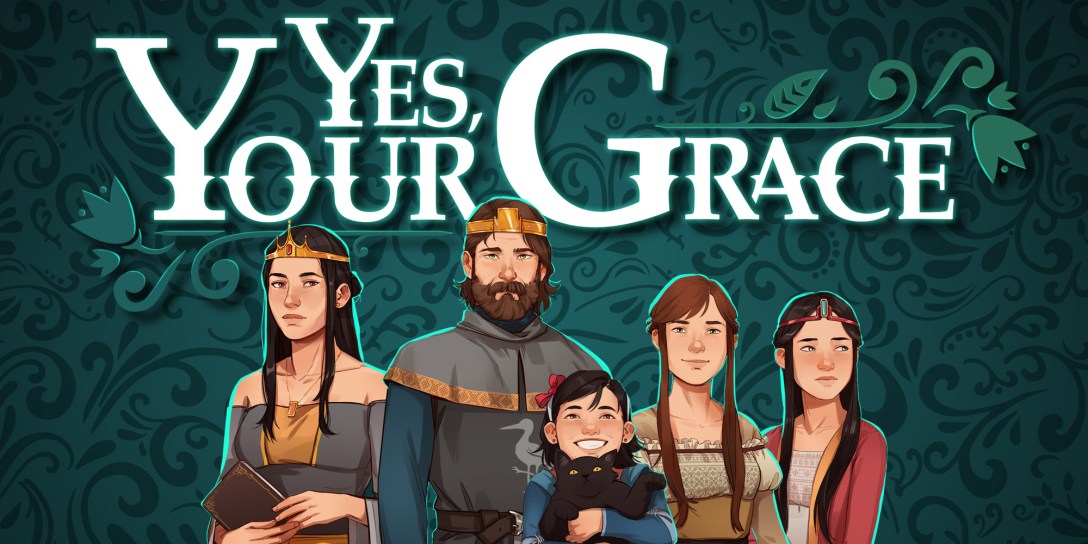
In the landscape of modern indie gaming, few titles manage to capture the claustrophobic weight of leadership as evocatively as Yes, Your Grace. Developed by Brave At Night, this pixel-art kingdom management sim doesn’t ask you to be a conqueror; it asks you to be a survivor. Having just watched the final credits roll, I find myself in a state of restless contemplation.
It is a game that thrives on a paradox: it is mechanically simple, yet emotionally exhausting. While it may not be a masterpiece of strategy, it is a masterclass in atmospheric storytelling. As I reflect on the fate of the Kingdom of Davern, I am struck by how the game balances the cold calculations of a king with the warm, fragile heart of a father.
The Zen of Impending Doom
The first thing that strikes you about Yes, Your Grace is its rhythm. Despite the dark, low-fantasy setting—a world where starvation, war, and ancient curses are constant threats—the actual gameplay is remarkably relaxing.
The loop is meditative: each week, you sit on your throne. A line of petitioners enters. A peasant needs gold to fix a roof; a merchant offers a risky investment; a lord demands supplies in exchange for loyalty. You click, you listen, and you decide. This “Lite” management system, built on four basic resources (Gold, Supplies, Happiness, and Army), creates a comfort zone. You fall into a routine of “numbers-balancing,” almost forgetting that these numbers represent human lives.
Cedani: The Soul of the Kingdom
Among the darkness, there is one beacon of light that truly stole my heart: Cedani, the youngest daughter. While the rest of the game is drowning in political intrigue and blood, Cedani lives in a world of “monsters,” imaginary friends, and whimsical pets.
She serves as a vital emotional relief, but her role is deeper than just a distraction. Protecting her innocence became my unofficial main quest. While the kingdom was crumbling, I found myself desperately trying to keep her fantasy world intact. Seeing her shielded from the horrors of war and the cynicism of the court was, quite honestly, heart-melting. In a game that forces you to be a monster to survive, Cedani is the reason you try to stay human. She is the innocence that makes every gold coin spent on a “monster hunt” feel more valuable than a thousand soldiers.
The Asalia Dilemma: When Pragmatism Becomes Cruelty
However, this tenderness toward Cedani makes the fate of the middle daughter, Asalia, even harder to swallow. This is where the game’s “ethics” truly drew blood. While the marriage of the eldest daughter, Lorsulla, feels like an inevitable narrative catalyst, the fate of Asalia is a choice—a brutal, pragmatic trade.
As the invasion loomed, I found myself in a desperate corner. I needed the Duke’s 1,000 soldiers. The price? Asalia’s hand in marriage to a repulsive, elderly man. In any other strategy game, this would be a trivial transaction. But Yes, Your Grace makes you feel the grime of that decision.
When the final “recap cards” appeared, they didn’t celebrate my tactical genius. Instead, they showed me that Asalia lived a life of profound misery, married to a man she detested. I saved Davern, but I sold my daughter’s soul to buy that peace. The game forces you to confront the reality that being a “Good King” and a “Good Father” are often mutually exclusive.
The Avalanche: A Betrayal of Agency?
This brings me to the most controversial aspect of the game: the “scripted” nature of the Great War. I approached the final invasion with a sense of pride. I had played “perfectly,” sacrificing Asalia’s happiness for a massive army. I expected a final battle where my strategy would be rewarded.
Instead, the victory was delivered by a Deus Ex Machina: a massive avalanche that wiped out the enemy.
From a narrative perspective, the avalanche reinforces the theme of human insignificance against fate. But from a game design perspective, it feels like a betrayal. If the avalanche was always going to save us, then my sacrifice of Asalia was, mechanically, unnecessary. This “disconnect” is the game’s biggest flaw: when a player’s agency is overridden by a scripted event, the moral weight of previous choices is retroactively lightened. Why sell a daughter if a pile of snow would have done the job for free?
The Magic Problem and the Failed Ritual
Another area of frustration was the “High Fantasy” elements. Throughout the story, you encounter omens and the crucial ritual for a male heir. In my game, the ritual failed—likely due to a hidden variable or a confusing translation of the instructions.
In a management game, failure should be a teaching moment. But here, the failure felt opaque and unearned. Similarly, the “Ghost Knights” and supernatural quests often felt like “resource sinks”—mechanics designed to drain your gold without providing a satisfying narrative payoff. The game flirts with magic but never quite decides if it’s a real force or just medieval superstition, leaving many subplots feeling like dead ends.
Final Thoughts: A Crown of Lead
Despite these mechanical flaws, Yes, Your Grace succeeds because of its emotional honesty. The “Summary Cards” at the end act as a mirror, forcing you to look at the wreckage of your “success.”
In my ending, the Kingdom was safe, the advisor was a loyal friend, and Cedani was still a happy child—protected by the fantasy world I helped her build. But the throne was empty of an heir, and Asalia’s happiness was the fuel I burned to keep the fires of Davern lit.
It is an interactive folk tale about the things we lose when we try to save everything. It reminds us that every “Yes, Your Grace” whispered by a subject is a debt that the King will eventually have to pay, often with the things he loves most. I saved the kingdom, but I lost the father I wanted to be. And perhaps, that is the most realistic “King Simulator” experience of all.
Discover more from Zera's Castle
Subscribe to get the latest posts sent to your email.
 Zera's Castle